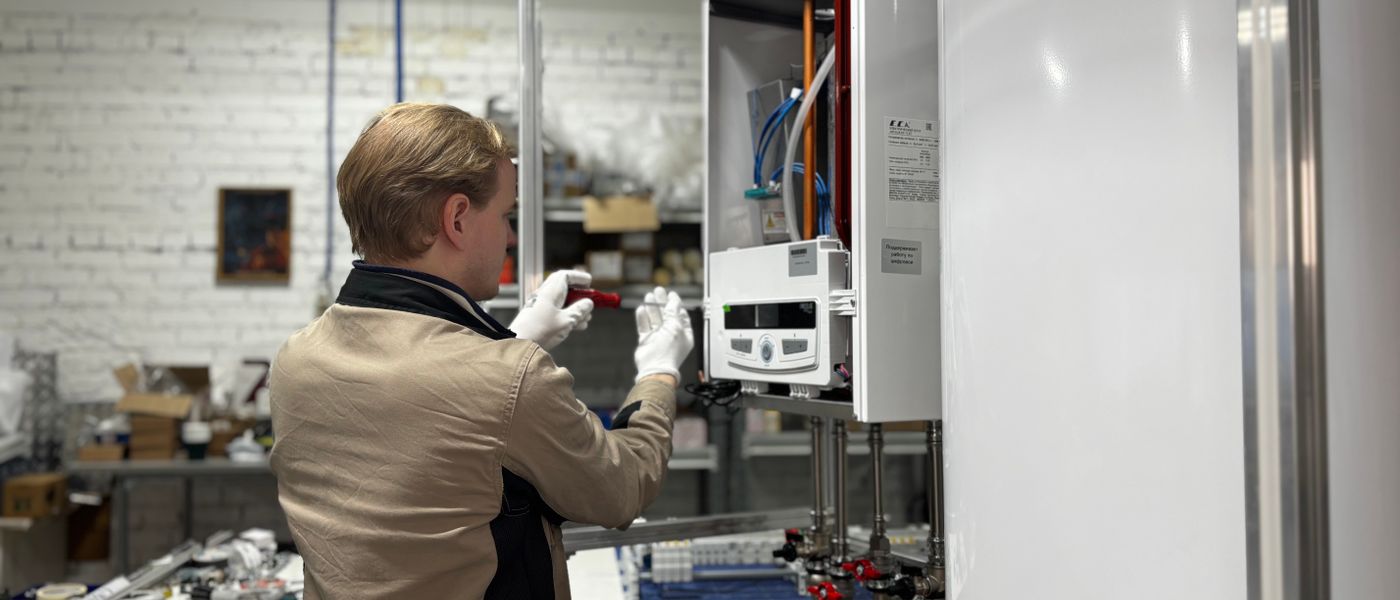
Water heater replacement, repair & installation
Honest guidance on tank vs. tankless, repair vs. replacement, and what makes sense for your home and budget.
Signs your water heater may need attention
These are indicators that warrant an assessment — not a diagnosis. An on-site inspection will determine the actual condition and appropriate next step.
Water heater types — comparison overview
This table provides a general overview. Specific performance, cost, and suitability depend on your home, gas service, and usage. An assessment helps determine the right fit.
| Conventional Tank | Tankless (On-Demand) | Electric Tank | Gas Tank | |
|---|---|---|---|---|
| Space requirement | Moderate to large | Small — wall-mounted | Moderate | Moderate to large |
| Upfront cost | Lower | Higher | Varies | Varies |
| Operating cost | Moderate | Varies by household | Varies by usage | Varies by gas rates |
| Hot water supply | Limited by tank size | Continuous (with proper sizing) | Limited by tank size | Limited by tank size |
| Suitable for | Most households | High-demand or small spaces | No gas connection | Gas-connected homes |
| Installation complexity | Straightforward | Higher — venting, gas sizing | Straightforward | Standard |
| Typical lifespan | 8–12 years | 15–20 years (with maintenance) | 8–12 years | 8–12 years |
| Maintenance notes | Annual flush recommended | Descaling in hard water areas | Annual flush recommended | Annual flush recommended |
Water heater maintenance
Regular maintenance extends the life of your water heater and can prevent unexpected failures. The following items are generally recommended — some can be done by a careful homeowner, others are best handled by a plumber.
- Annual tank flush to remove sediment (a plumber can perform this or advise on how to do it safely)
- Check the pressure relief valve annually — lift and release briefly to confirm it functions
- Inspect the anode rod every 2–3 years — replacement extends tank life significantly
- Keep the area around the unit clear of storage
- Check connections and fittings for any signs of corrosion
- Know where your shut-off valve is located
Frequently asked questions
No hot water?
Call directly for urgent issues. For assessments and replacements, submit a request.
Call (204) 555‑0100Request ServiceRequest a callback
Re: Water Heater